You do not have to read well from the start.
Read a short sentence slowly. Listening back to how you spoke is already practice.
Fluency is the feeling of four things working together.
Fluent speech does not mean speaking fast. It is closer to saying words accurately, keeping a comfortable pace, and pausing where meaning breaks.
Whatsay does not push speed. Start by reading short sentences clearly, then check recognition results and recordings.
Four elements that make speaking easier
Accuracy
The ability to avoid skipping or replacing words. At first, focus on accuracy before speed.
Pace
Comfortable speech matters more than fast speech. The goal is to find a pace that is easy to understand when you listen back.
Pauses
Natural pauses create flow. Reading by meaning chunks helps reduce rushed speech.
Expression
Change your voice slightly for periods, questions, and emphasized words. Speech sounds much more natural.
Clear speech has small standards you can check.
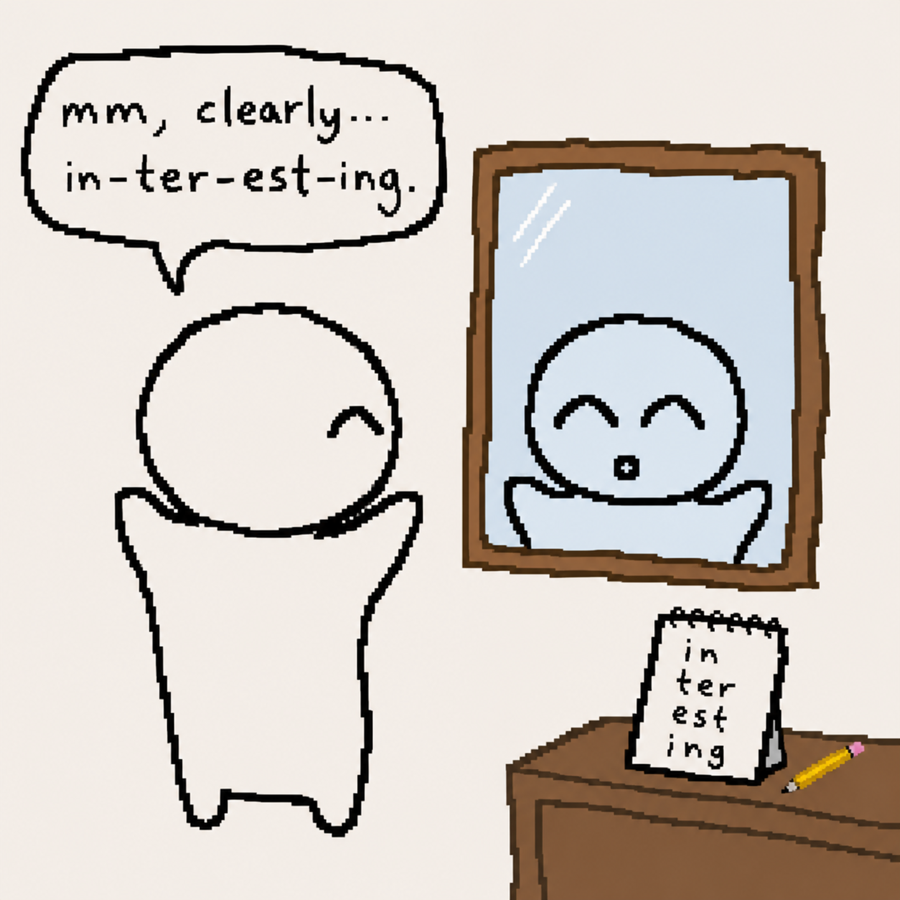
Move your mouth a little more
Pronunciation comes from mouth shape and tongue movement. At first, read while checking whether vowels open enough.
Do not blur the ㅎ sound
Words with ㅎ, such as “확실히” and “해요,” can sound weak when rushed. Giving ㅎ a little shape makes the sentence clearer.
Press the final ㄴ lightly
When final consonants weaken, words run together. In phrases like “한 문장” and “본 내용,” briefly confirm the final ㄴ before moving on.
Read at about 0.75x your usual speed
When speech speeds up, pronunciation can blur. Even if it feels slow to you, it often sounds clearer to listeners.
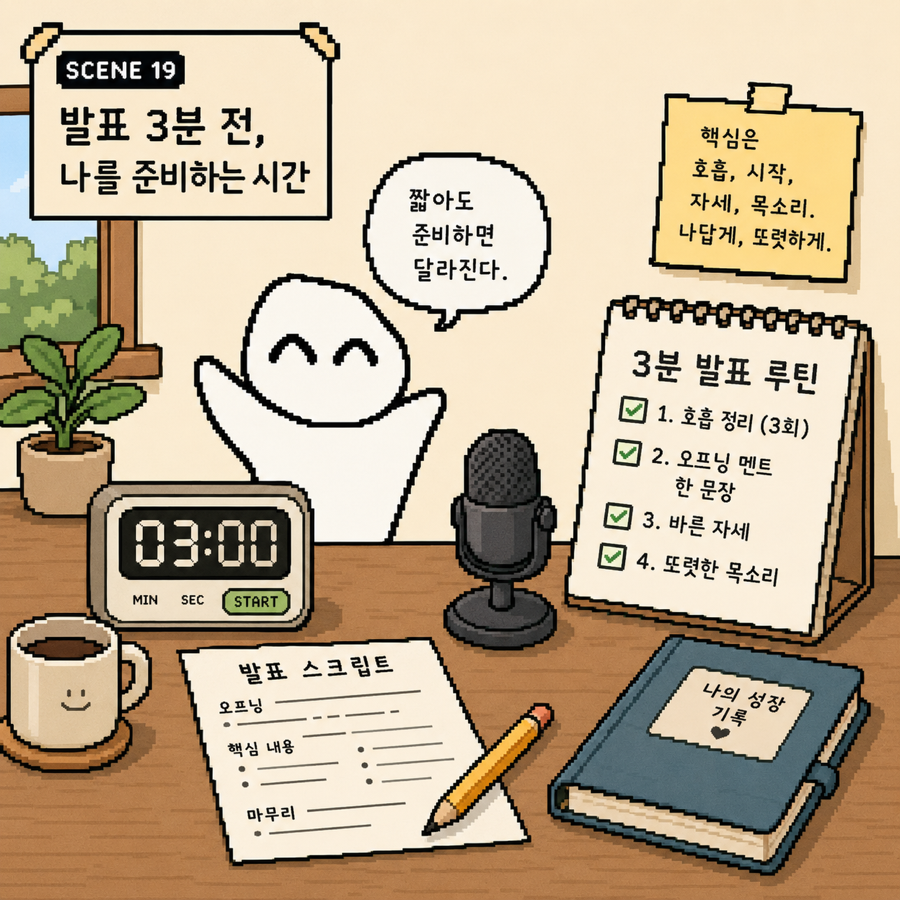
Three minutes a day is enough.
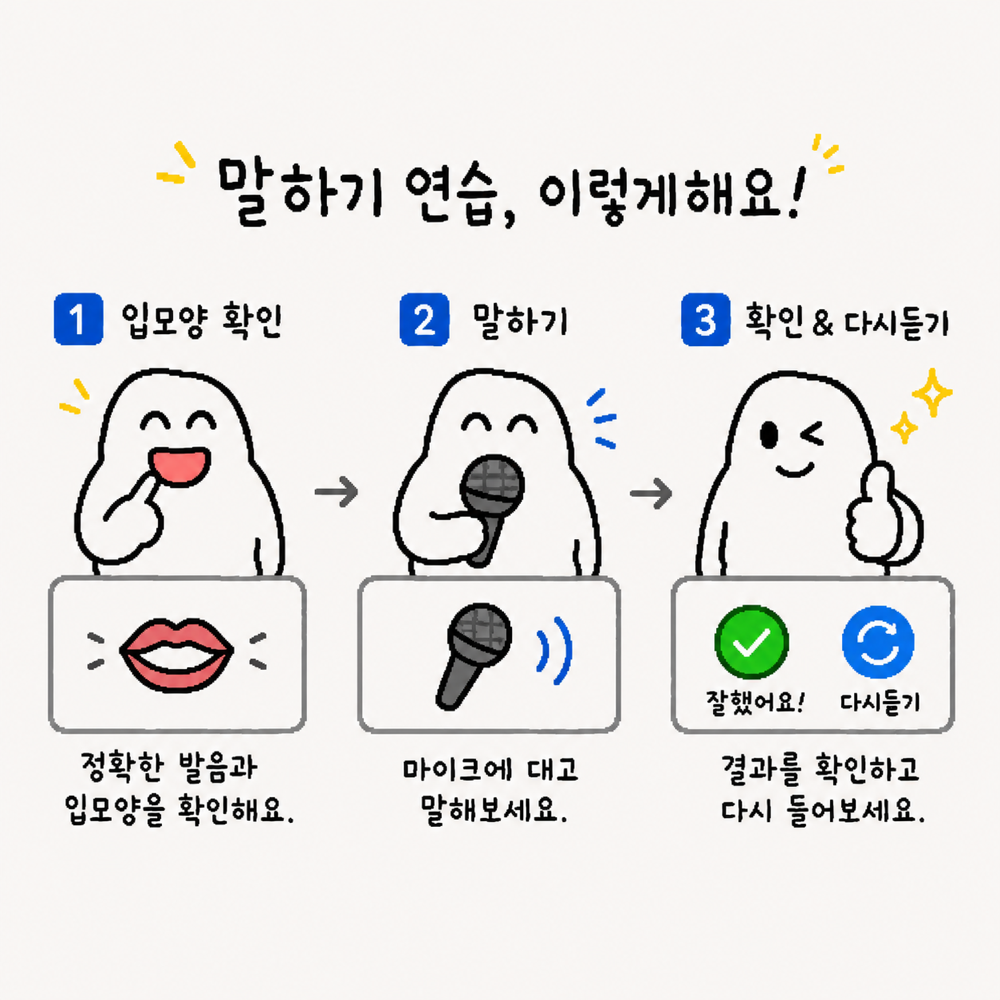
Read the sentence with your eyes first
Before recording, scan the sentence once. If there are difficult words, chunk them silently first.
Read aloud slowly
The first goal is accurate reading. Do not rush; say the final word clearly too.
Check the recognition result
A different result is not a failure. Seeing which words sounded different shows what to practice next.
Listen back to your voice
It is okay if it feels awkward at first. Listening to how you actually spoke helps improve speaking habits.
How to read one sentence three times
Trying to read perfectly from the start makes practice hard to continue. Read the same sentence three times with a different purpose each time.
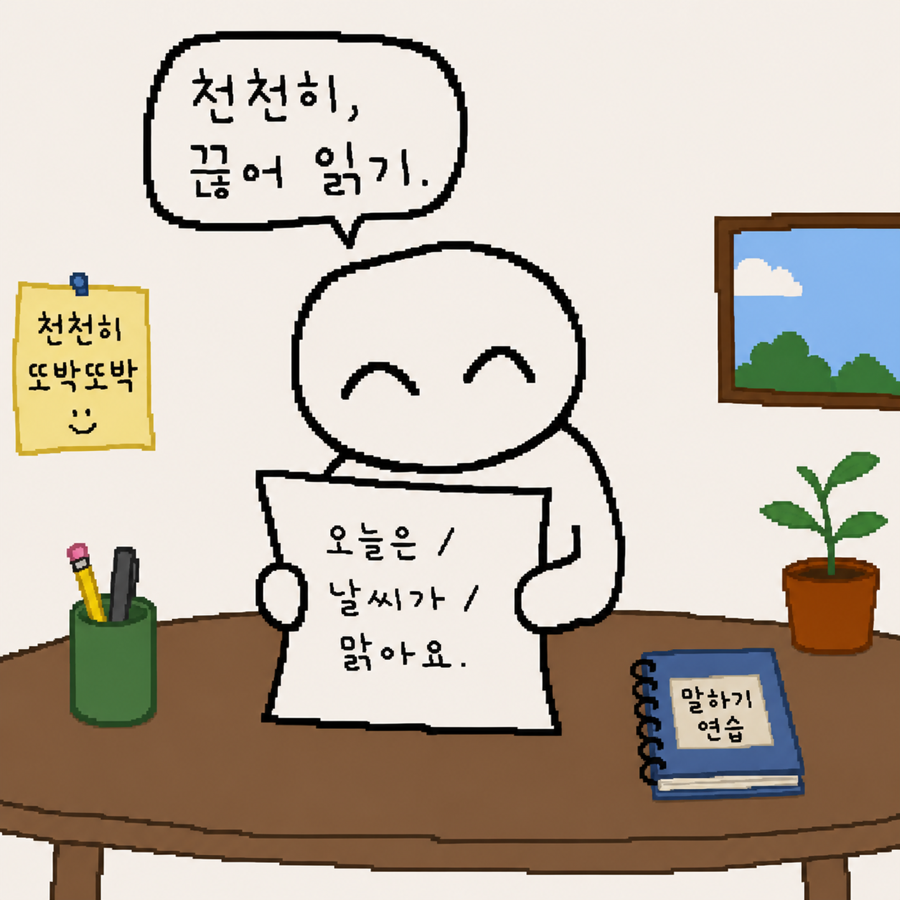
Mouth-shape readingSlowly check whether vowels open enough.
Consonant readingBring out sounds that blur easily, such as ㅎ, ㄴ, and final consonants.
Natural readingKeep the first two in mind while preserving the sentence flow and pauses.
What to check when listening to recordings
A recording is not an evaluation; it is a checking tool. Do not fix everything at once. Pick just one item below.
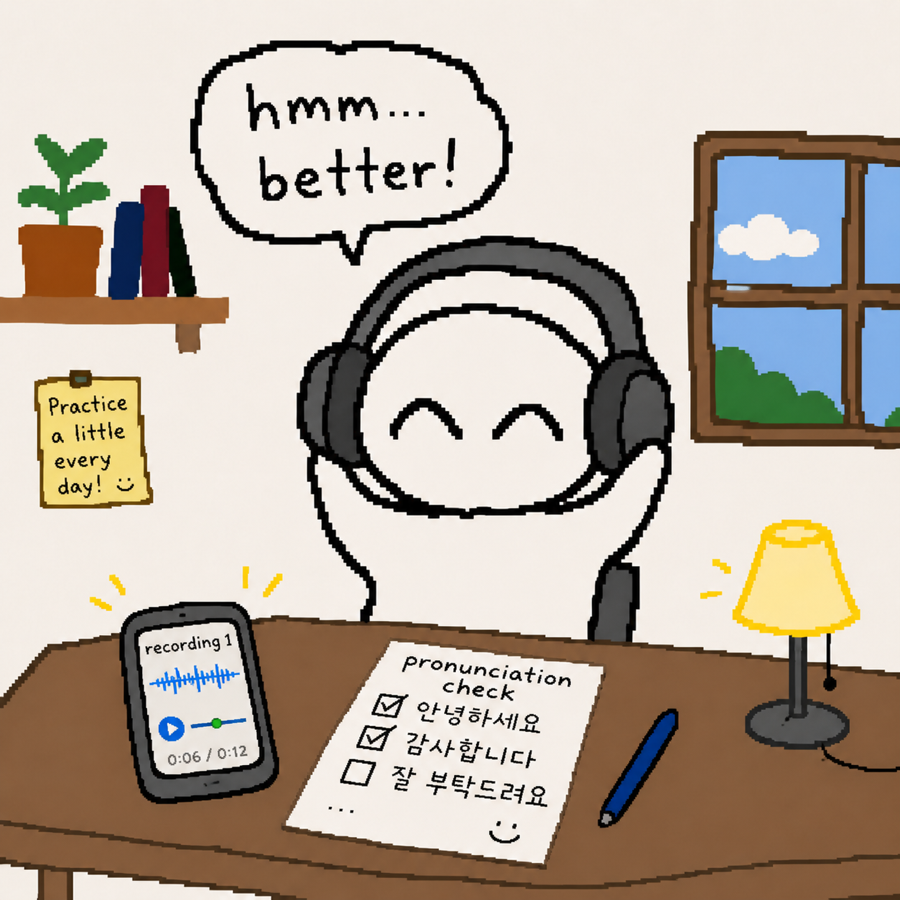
- Were any vowels blurred because your mouth barely moved?
- Did final consonants or ㅎ sounds disappear at the ends of words?
- Did parts of the sentence run together because you read too fast?
- Did your voice get smaller as soon as you reached a difficult word?
Why does repeated reading help?
Reading the same sentence several times makes speaking it aloud easier. With more ease, you can better control pace, pauses, and intonation.
First readCheck whether you missed any words.
Second readFind where pauses sound natural.
Third readListen for pitch changes and endings.
Practice sentences are easier to say when the situation is clear.
Quotes and short sentences
Short sentences are good for warming up. Read one sentence accurately, then read it again at a different pace.
Dialogue and service responses
Imagining what the other person said makes the purpose of the sentence clearer. Answering questions helps you choose intonation.
Scripts and announcements
Do not try to read long sentences perfectly at once. Find the key words first, then check accuracy, pauses, and endings.
Interviews and presentations
The first sentence can reduce tension. Pause once after greeting, then clearly say the key words that describe you.
How to choose a practice room
If you know what you need today, choose practice close to that situation. Use presentation openings before presenting, service responses before customer interaction, and quotes for warm-up.
Warm-upChoose today's quote, slow clear reading, or emotion reading to warm up briefly.
Real-use preparationInterview answers, presentation openings, and phone responses are good for practicing the first sentence you need right away.
Delivery checkScript reading and announcements fit practice for delivering information accurately.
Checklist for speech that sounds fluent
- Did you read without missing words?
- Did you avoid rushing through the sentence?
- Did you pause naturally where meaning breaks?
- Did your voice carry even a little sense of periods, questions, or emphasis?
- Was it easy to understand when you listened back?
Things that can be confusing at first
¿Una puntuación baja significa mala pronunciación?
Not necessarily. Noise, microphone position, speaking speed, and runtime environment can change the result. Treat the score as reference only.
How much should I practice each day?
At first, completing one sentence is enough. Short daily repetition is less burdensome than long sessions at once.
Is it okay to read very slowly?
Yes. Early on, learn accuracy and pauses first, then gradually move toward a natural pace.
Do I have to save recordings?
No. You can turn off recording auto-save in Settings. Saved records can also be deleted there.
References used
Speaking fluency can be viewed through accuracy, pace, pauses, and expression. These are everyday practice standards, not professional evaluation or treatment.

How about reading just one sentence today?
You do not have to try too hard. Speak briefly, listen again, and adjust just one thing in the next sentence.
Empezar hoy